

The records request arrives on a Thursday, forwarded from the city attorney with a one-line note: “please advise.” The plaintiff wants five years of firearms training records. Not just for the officer involved. For his whole shift. Courses of fire, scoresheets, qualification dates, remediation plans, drills, instructor certs, and the maintenance history of the weapon he carried.
The training coordinator starts pulling it together and finds what they always find. Two years live in binders. One lives in a spreadsheet built by a rangemaster who retired to Tennessee. Some scoresheets are in a box that has changed buildings twice. Everyone knows the training happened. Now the department has to prove it, line by line, to people who were not there and are not feeling generous.
That gap, between training that happened and training you can prove, is the difference between a defensible program and an expensive one. And closing it is easier than most command staff thinks.
The legal math is not on your side
Plaintiffs’ attorneys do not sue four seconds of body camera footage. They sue the program behind it. The theory, in plain English: the agency failed to train its people, or trained them so thinly the failure was predictable. Courts set a high bar for that, and a well run program clears it easily. In discovery, training that was never documented and training that never happened look identical. You can run the best program in your state, and if the records are binders and boxes, the jury hears a story about indifference and you supplied the exhibits.
Take our quick assessment quiz now to see how vulnerable you and your agency are.
It is not only litigation. POST audits want documentation. Accreditation wants it. Insurance carriers increasingly want it, and some now price coverage on what an agency can actually produce. The only open question is whether producing it takes five minutes or five weeks.
Records are a feedback loop, not just a shield
The same records that protect the agency make the training better. When every session is captured, patterns surface early. The officer whose scores have slipped three quals running gets help in March instead of failing in November. The drill half the department keeps busting gets rebuilt instead of repeated. Command sees pass rates by shift, by weapon, by drill, and sees who is due, who has lapsed, and who has never qualified on a platform they are carrying right now. That is an honest picture of readiness instead of a vibe, and most chiefs have never had one.
There is a labor dividend too. Standards written down and applied evenly are standards nobody can claim were invented after the fact. Officers can see their own records anytime, so status is never a surprise, and when discipline happens it rests on data everyone has been looking at, not somebody’s memory of a range day three years back. Transparency is cheap when it is automatic, and it buys trust on both sides of the table.
The rangemaster does not need another spreadsheet
The usual objection is time, and it is fair. Instructors already lose evenings transcribing scoresheets. The fix is not more documentation. It is less manual documentation.
This is where purpose built platforms changed the picture, and I will use BrassOps as my example, with the disclosure that I founded it, so read me accordingly. The goal is simple: the record is created the moment the training happens, by the person running it, in seconds, and never touched again.
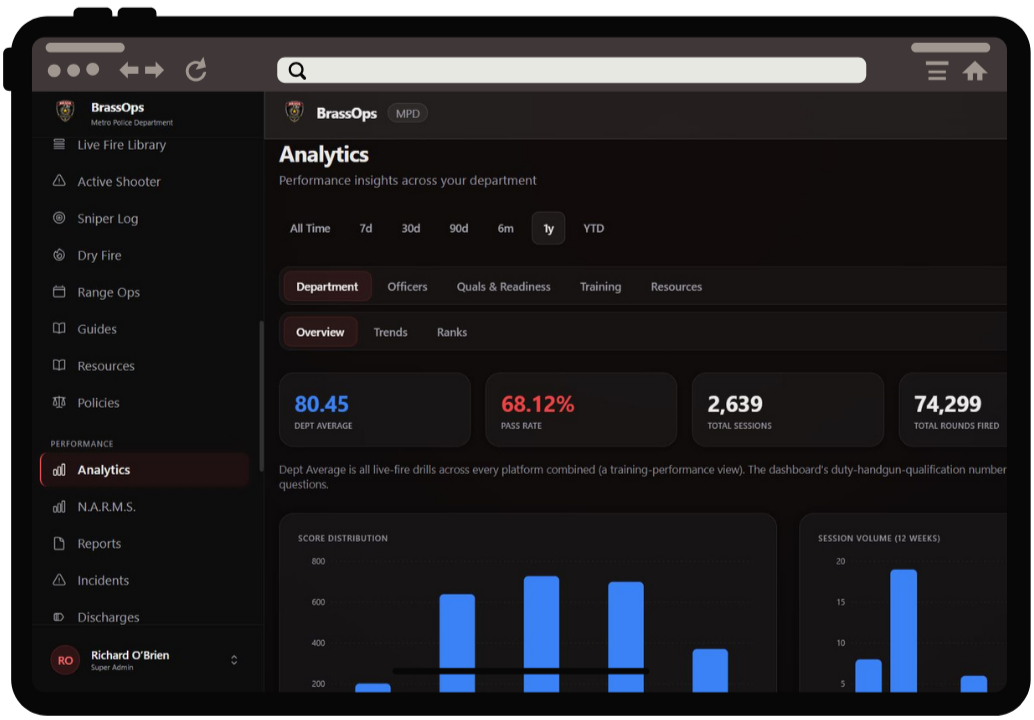
In practice, an instructor logs a whole relay from the line, on a tablet, in less time than it took to score the targets. Pass and fail compute against the department’s own standards, so there is no math at a kitchen table and no arguing later. Qualification status updates itself and flags who is coming due before an auditor does. After a range day, the after action report and next lesson plan draft themselves from the actual results, for the instructor to review and sign instead of write. The armory rides along: inspections, repairs, round counts, ammunition lots. If a weapon is ever alleged to have malfunctioned, its history is one search away, not one archaeology project away. And everything sits behind an audit trail, so the file you produce in discovery is provably the same file that existed all along.
When someone asks for the records, one officer or a whole shift, it is a report you generate, not a project you staff. That is the five-minute-versus-five-week-reference difference, and in a records request it is the whole ballgame.
The fear of AI
Some of this automation is AI assisted, and any command staff worth its salt should ask where the data goes. In BrassOps, officer identities never leave the agency. Names and badge numbers are swapped for neutral placeholders before any request goes out and restored afterward, so the AI provider never sees who your people are. An agency that wants no third party AI at all can shut every AI feature off with one switch and keep the rest of the system. That is the standard I would hold any vendor to, ours included.
You already paid for the training. Keep the receipt.
Every agency already spends the money that matters: range days, ammunition, instructor hours, overtime. The training happens. What too many fail to keep is the proof, and the proof is the cheapest part of the whole program. It defends the officer and instructors in the deposition, defends the agency in the lawsuit, satisfies the auditor, reassures the carrier, and quietly makes the program better every month it runs.
The four seconds on the video will always be argued. The ten years behind them should not have to be.
About the author: Rich O’Brien is an active Law Enforcement Officer and Supervising Firearms Instructor and the founder of BrassOps, the firearms training and qualification records platform of the future, built for law enforcement, by law enforcement. Learn more at brassops.com.
Related Articles

This year, an I.U.P.A. Member and the daughter of an I.U.P.A. Member were awarded the Union Plus Scholarship! The I.U.P.A. put out a[...]
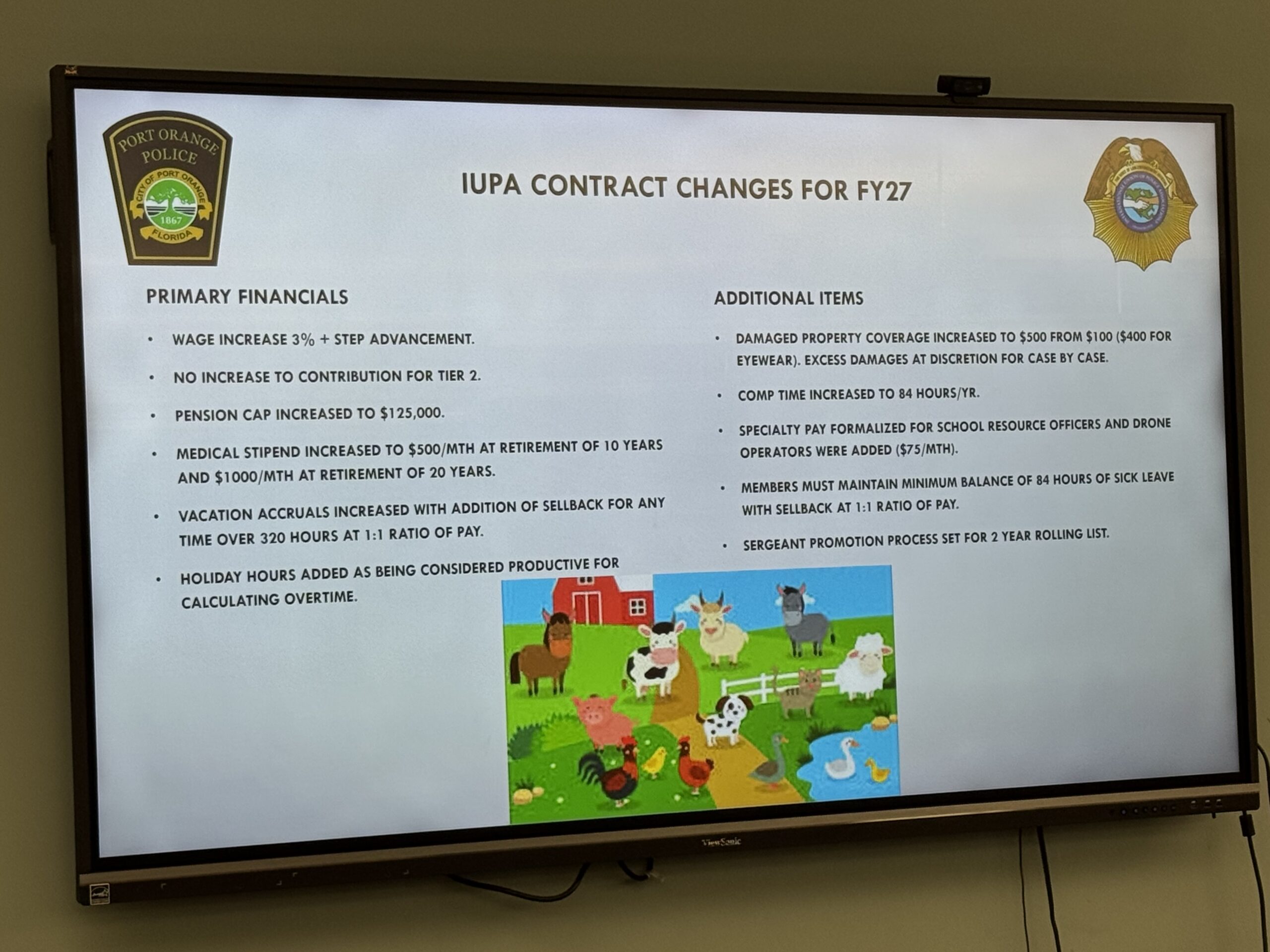
Port Orange Police Association, I.U.P.A. Local #6051 Members voted to approve their new one-year contract! I.U.P.A. Local #6051’s new contract includes a wage[...]
The records request arrives on a Thursday, forwarded from the city attorney with a one-line note: "please advise." The plaintiff wants five years[...]
